
 By Leo
 Mastering Agile operations for product-led businesses drives innovation & customer value. Learn real-world strategies for growth.
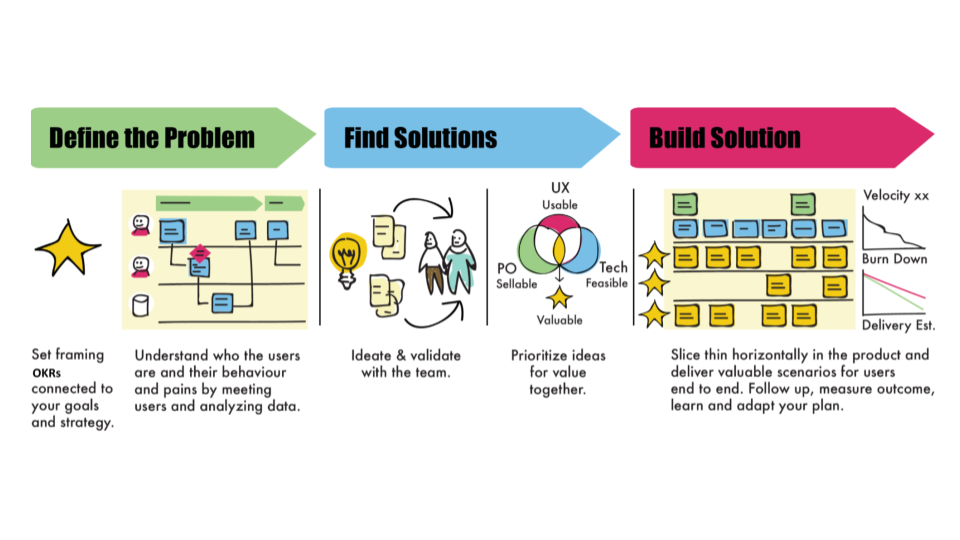
Implementing Agile operations for product-led businesses isn’t just about adopting a framework; it’s a fundamental shift in mindset. From my years of experience guiding teams, I’ve observed that true product-led growth blossoms when operational structures enable rapid iteration, deep customer understanding, and decentralized decision-making. This approach moves beyond traditional project management, integrating product development directly into how a business functions day-to-day. It’s about building a living, breathing system that continuously responds to market signals and user needs.
Key Takeaways:
- Agile operations are crucial for product-led growth, moving beyond simple framework adoption.
- Success relies on continuous learning and adaptation, integrating feedback loops at all levels.
- Cross-functional teams are essential for shared ownership and quicker decision-making.
- Clear metrics and a focus on customer value drive effective Agile implementation.
- Scaling Agile requires intentional efforts in communication, tooling, and cultural reinforcement.
- Leadership commitment is vital for overcoming resistance and fostering an Agile mindset.
- Product-led businesses thrive on rapid iteration and market responsiveness, enabled by Agile.
- Embrace experimentation and learn from failures to refine operational processes.
Aligning Strategy with Agile operations for product-led businesses
At its core, product-led growth means the product itself is the primary driver of customer acquisition, retention, and expansion. For this to work efficiently, the operational model must mirror this philosophy. This starts with strategic alignment. Every team, from engineering to marketing, needs to understand the overarching product vision and how their work contributes to customer value. We often see companies in the US struggle when their strategic planning operates in a silo, separate from daily execution.
Effective Agile operations for product-led businesses bridge this gap. Product roadmaps become living documents, informed by market data, customer feedback, and team capabilities. This requires regular, transparent communication. Quarterly business reviews, for example, should not just report on past performance but also re-evaluate priorities based on new insights. This continuous feedback loop ensures that resources are always directed towards the most impactful initiatives. It fosters an environment where teams feel empowered to make decisions that directly benefit the product and, by extension, the customer.
Fostering Cross-Functional Collaboration and Ownership
One of the cornerstones of successful product-led organizations is the empowered, cross-functional team. In my career, I’ve seen the stark difference between teams where engineers, designers, and product managers work in isolation versus those that operate as a cohesive unit. In Agile operations, these teams own a specific part of the product or a particular customer journey end-to-end. This ownership cultivates a deeper sense of responsibility and accountability. They are not just completing tasks; they are solving problems for customers.
Collaboration extends beyond individual teams. It means breaking down departmental barriers. Imagine a scenario where a sales team identifies a recurring customer pain point. In an Agile setup, this feedback directly informs the product team’s backlog, leading to a swift, targeted solution. This fluid information exchange accelerates product development and ensures the product remains highly relevant. Tools and processes should facilitate this constant dialogue, making it easy for anyone in the organization to contribute insights and for teams to act upon them quickly. This collaborative spirit drives innovation and efficiency.
Scaling Agile operations for product-led businesses Across the Organization
Scaling Agile isn’t merely about adding more teams. It’s about maintaining consistency in principles and practices while allowing for necessary adaptations across different functions. From my experience with large-scale implementations, the biggest challenge often lies in harmonizing multiple Agile teams without stifling their autonomy. This involves establishing a clear “north star” metric – a single, unifying goal that all teams contribute to. For a product-led business, this could be customer activation, retention rate, or average revenue per user.
Centralized guidance with decentralized execution is key. This might involve an Agile Center of Excellence providing coaching, training, and best practices, while individual teams retain the flexibility to determine their own sprint cadences and specific tools. Clear communication channels, shared repositories for documentation, and regular “scrums of scrums” or similar synchronization meetings become critical. These mechanisms prevent silos from forming as the organization grows, ensuring that Agile operations for product-led businesses remain cohesive and effective across every level.
Continuous Improvement in Agile operations for product-led businesses
The journey with Agile operations is never truly finished; it’s a cycle of continuous learning and adaptation. This means regularly reviewing performance, gathering feedback, and making iterative adjustments to processes, tools, and even organizational structures. Retrospectives aren’t just for individual sprints; they should happen at a broader organizational level, perhaps quarterly or bi-annually, to assess how the overall system of Agile operations for product-led businesses is functioning. What’s working? What needs refinement?
Metrics play a crucial role here. Beyond typical product metrics, businesses should track operational efficiency indicators, such as lead time, deployment frequency, and team satisfaction. These provide insights into the health of the Agile system itself. Cultivating a culture where experimentation is encouraged, and failure is seen as a learning opportunity, is paramount. This allows for bold moves and genuine innovation. By consistently questioning the status quo and seeking out incremental improvements, organizations ensure their operational agility keeps pace with evolving market demands and customer expectations.